
A Storm Is Brewing in the Global Supply Chain
On December 1, 2025, the world changed.
That was the day China's Ministry of Commerce enacted sweeping new export controls on rare earth elements and processing technologies. Industry analysts have already dubbed it the "December Shock." The implications are seismic. Western defense contractors, automotive manufacturers, and technology companies suddenly found themselves staring at a supply chain nightmare they had long feared but never fully prepared for.1
Think about what this means for a moment.
The United States imports 100% of its primary niobium. Every hypersonic missile. Every high-strength steel beam in your local bridge. Every next-generation battery that promises to charge your electric vehicle in under ten minutes. All of it depends on a metal that comes almost entirely from Brazil, with a Chinese-owned company controlling a significant portion of that supply.2
The rare earth situation is equally precarious. China controls roughly 60% of global rare earth mining and 90% of processing capacity. With the stroke of a pen, Beijing has effectively weaponized access to the very elements that power everything from electric vehicles to F-35 fighter jets.
This is not a theoretical risk anymore. This is happening right now.
And buried in the geological formations of northern Quebec, roughly 100 kilometers from the Western world's only operating underground niobium mine, sits a company that may have stumbled onto exactly what America needs.
And buried in the geological formations of northern Quebec, roughly 100 kilometers from the Western world's only operating underground niobium mine, sits a company that may have stumbled onto exactly what America needs.
North American Niobium and Critical Minerals Corp. (CSE: NIOB; OTCQB: NIOMF; FSE: IOR) is not a household name. Not yet. With a market capitalization of approximately C$33 million, it flies well under the radar of most institutional investors.
But what NIOB lacks in size, it may make up for in timing and strategic positioning. The company has consolidated nearly 30,000 hectares of exploration ground in Quebec's Grenville Province,the geological terrain that potentially hosts carbonatite and alkaline intrusions known to create world-class niobium and rare earth deposits.
This report will walk you through why this moment matters. Why this company matters. And why the next 12 months could be pivotal for investors willing to look beyond the headlines.
But what NIOB lacks in size, it may make up for in timing and strategic positioning. The company has consolidated nearly 30,000 hectares of exploration ground in Quebec's Grenville Province,the geological terrain that potentially hosts carbonatite and alkaline intrusions known to create world-class niobium and rare earth deposits.
This report will walk you through why this moment matters. Why this company matters. And why the next 12 months could be pivotal for investors willing to look beyond the headlines.
Investment Highlights At A Glance
NIOB: KEY INVESTMENT FACTORS
Strategic Timing: China's December 2025 export controls have created urgent demand for non-Chinese critical mineral sources 1
District-Scale Land Package: Nearly 30,000 hectares consolidated in Quebec's Grenville Province, 100-130km from the operating Niobec mine that was acquired from IAM Gold for US$500m in 20153
High-Grade Surface Results: Historical samples showing up to 2.7% TREE and 0.32% Nb from surface sampling4
Carbonatite Discovery Potential: Recent fieldwork identified carbonatite boulders and subcrops potential indicators of a major deposit6
Fully Funded 2026 Program: C$4.82 million exploration budget with 6,000 meters of drilling planned8
Tight Share Structure: Approximately 24.4 million shares fully diluted provides significant leverage to discovery
Experienced Leadership: Board includes former Cliffs Natural Resources CEO and former Canadian Cabinet Minister
District-Scale Land Package: Nearly 30,000 hectares consolidated in Quebec's Grenville Province, 100-130km from the operating Niobec mine that was acquired from IAM Gold for US$500m in 20153
High-Grade Surface Results: Historical samples showing up to 2.7% TREE and 0.32% Nb from surface sampling4
Carbonatite Discovery Potential: Recent fieldwork identified carbonatite boulders and subcrops potential indicators of a major deposit6
Fully Funded 2026 Program: C$4.82 million exploration budget with 6,000 meters of drilling planned8
Tight Share Structure: Approximately 24.4 million shares fully diluted provides significant leverage to discovery
Experienced Leadership: Board includes former Cliffs Natural Resources CEO and former Canadian Cabinet Minister
Executive Summary: The Asymmetric Opportunity
North American Niobium and Critical Minerals Corp. (CSE: NIOB; OTCQB: NIOMF) represents a compelling, albeit speculative, exposure to one of the most significant resource realignments of our generation.
The company, formerly known as First American Uranium Inc., has executed a strategic pivot that places it squarely at the intersection of geological scarcity and geopolitical necessity. Its exploration targets, niobium and rare earth elements are precisely the materials that the Western military-industrial complex cannot afford to source from adversarial nations.
Consider the context. The global critical minerals market is undergoing a structural bifurcation. Prices for key rare earth oxides like Neodymium-Praseodymium (NdPr) have surged over 40% since July 2025 in anticipation of supply restrictions. The U.S. Department of War has begun deploying Defense Production Act funding to secure domestic niobium processing capabilities.
NIOB is positioned to potentially benefit from this macro environment through its "Three-Pillar" investment thesis:
1. Strategic Sovereignty: Niobium is essential for hypersonic weapons systems and high-strength steel, with no effective substitutes. The U.S. imports 100% of its primary niobium supply.
2. The Grenville Geological Advantage: NIOB's properties sit in the same location of geological terrain as the Niobec mine: the only underground niobium producer in the Western Hemisphere.
3. Financial Discipline: With approximately 26 million shares fully diluted and recently closed C$4.82 million in financings, NIOB maintains leverage to discovery without immediate dilution pressure.
The company, formerly known as First American Uranium Inc., has executed a strategic pivot that places it squarely at the intersection of geological scarcity and geopolitical necessity. Its exploration targets, niobium and rare earth elements are precisely the materials that the Western military-industrial complex cannot afford to source from adversarial nations.
Consider the context. The global critical minerals market is undergoing a structural bifurcation. Prices for key rare earth oxides like Neodymium-Praseodymium (NdPr) have surged over 40% since July 2025 in anticipation of supply restrictions. The U.S. Department of War has begun deploying Defense Production Act funding to secure domestic niobium processing capabilities.
NIOB is positioned to potentially benefit from this macro environment through its "Three-Pillar" investment thesis:
1. Strategic Sovereignty: Niobium is essential for hypersonic weapons systems and high-strength steel, with no effective substitutes. The U.S. imports 100% of its primary niobium supply.
2. The Grenville Geological Advantage: NIOB's properties sit in the same location of geological terrain as the Niobec mine: the only underground niobium producer in the Western Hemisphere.
3. Financial Discipline: With approximately 26 million shares fully diluted and recently closed C$4.82 million in financings, NIOB maintains leverage to discovery without immediate dilution pressure.
Why does this matter right now?
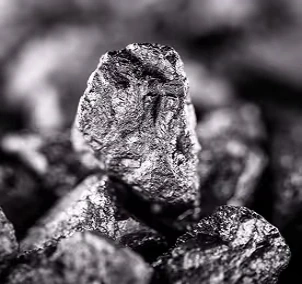
Because the company has a fully funded exploration program about to commence. The 2026 campaign will see 6,000 meters of diamond drilling across high-priority targets at Seigneurie, Bardy, and Blanchette properties. Results from Fall 2025 channel sampling are expected in Q1 2026. These catalysts could materially change the market's perception of NIOB's value proposition.
For context on what successful discovery could mean, consider WA1 Resources (ASX: WA1). This Australian explorer went from a sub-$20 million market cap to approximately A$1.2 billion following the discovery of a carbonatite-hosted niobium deposit. NIOB currently trades at roughly 3% of that valuation.
This is not a prediction of similar outcomes. Exploration is inherently risky. But it illustrates the magnitude of re-rating potential that exists in this sector for companies that deliver on geological promise.
For context on what successful discovery could mean, consider WA1 Resources (ASX: WA1). This Australian explorer went from a sub-$20 million market cap to approximately A$1.2 billion following the discovery of a carbonatite-hosted niobium deposit. NIOB currently trades at roughly 3% of that valuation.
This is not a prediction of similar outcomes. Exploration is inherently risky. But it illustrates the magnitude of re-rating potential that exists in this sector for companies that deliver on geological promise.
The Market Opportunity: Understanding the Critical Minerals Crisis
The "December Shock" and What It Means
To understand why NIOB matters, you first need to understand the scale of the problem the company is trying to solve.
On October 9, 2025, China's Ministry of Commerce issued Announcement No. 61, detailing sweeping export control measures on rare earth elements and associated processing technologies.10 These regulations came into full force on December 1, 2025, and represent the most aggressive use of economic statecraft in the critical minerals sector to date.
The scope is breathtaking. The controls cover not just raw materials like Dysprosium, Terbium, Neodymium, and Praseodymium, but also the technologies required to process them. This includes extraction and separation intellectual property, effectively blocking Western attempts to build independent refineries without developing entirely novel processing methods.¹
Think of it like this: China has not just turned off the tap. They have removed the plumbing.
The regulations imply jurisdiction similar to the U.S. Foreign Direct Product Rule (FDPR), asserting control over any foreign-made product that incorporates Chinese-origin rare earth technology or materials exceeding trace thresholds.11 Western defense contractors and automotive OEMs must now audit their supply chains down to the molecular level.
The market has responded accordingly. NdPr oxide prices surged over 40% between July and late 2025. More importantly, a "bifurcated price" has emerged where non-Chinese units of production command a significant geopolitical premium.
On October 9, 2025, China's Ministry of Commerce issued Announcement No. 61, detailing sweeping export control measures on rare earth elements and associated processing technologies.10 These regulations came into full force on December 1, 2025, and represent the most aggressive use of economic statecraft in the critical minerals sector to date.
The scope is breathtaking. The controls cover not just raw materials like Dysprosium, Terbium, Neodymium, and Praseodymium, but also the technologies required to process them. This includes extraction and separation intellectual property, effectively blocking Western attempts to build independent refineries without developing entirely novel processing methods.¹
Think of it like this: China has not just turned off the tap. They have removed the plumbing.
The regulations imply jurisdiction similar to the U.S. Foreign Direct Product Rule (FDPR), asserting control over any foreign-made product that incorporates Chinese-origin rare earth technology or materials exceeding trace thresholds.11 Western defense contractors and automotive OEMs must now audit their supply chains down to the molecular level.
The market has responded accordingly. NdPr oxide prices surged over 40% between July and late 2025. More importantly, a "bifurcated price" has emerged where non-Chinese units of production command a significant geopolitical premium.
Why Niobium Is Irreplaceable

Niobium is often misunderstood as merely a steel additive. While 90% of niobium is indeed used in ferroniobium for High-Strength Low-Alloy (HSLA) steel, the applications driving future demand are where niobium becomes truly irreplaceable.
The Hypersonic Weapons Imperative: Niobium is the base element for C103 alloy (Nb-10Hf-1Ti), the standard material for rocket nozzles and hypersonic leading edges. With a melting point of 2,477°C, niobium-based alloys retain significant strength at temperatures exceeding 1,300°C, essential for scramjet engines.12
Companies like Castheon have developed proprietary 3D printing parameters specifically for Niobium C103, enabling rapid fabrication of complex geometries required for next-generation propulsion systems.13 There are no substitutes. If you want hypersonic capability, you need niobium.
The Hypersonic Weapons Imperative: Niobium is the base element for C103 alloy (Nb-10Hf-1Ti), the standard material for rocket nozzles and hypersonic leading edges. With a melting point of 2,477°C, niobium-based alloys retain significant strength at temperatures exceeding 1,300°C, essential for scramjet engines.12
Companies like Castheon have developed proprietary 3D printing parameters specifically for Niobium C103, enabling rapid fabrication of complex geometries required for next-generation propulsion systems.13 There are no substitutes. If you want hypersonic capability, you need niobium.

The Battery Revolution: Perhaps the most exciting development in the niobium market is the commercialization of Niobium-Titanium Oxide (NTO) anodes for lithium-ion batteries.
Toshiba commenced sample shipments of its SCiB™ Nb battery in June 2025.14 The performance metrics are remarkable. These cells can charge from 0% to 80% in under 10 minutes. They offer over 15,000 cycle life, compared to roughly 2,500 for standard NMC/Graphite cells.
Imagine a single battery pack lasting the entire lifespan of a commercial vehicle. That is the promise of niobium-enhanced battery technology. As this scales, niobium demand from the battery sector could grow substantially by 2030.
Toshiba commenced sample shipments of its SCiB™ Nb battery in June 2025.14 The performance metrics are remarkable. These cells can charge from 0% to 80% in under 10 minutes. They offer over 15,000 cycle life, compared to roughly 2,500 for standard NMC/Graphite cells.
Imagine a single battery pack lasting the entire lifespan of a commercial vehicle. That is the promise of niobium-enhanced battery technology. As this scales, niobium demand from the battery sector could grow substantially by 2030.
The Supply Concentration Problem
Global niobium production is effectively an oligopoly:
. CBMM (Brazil): Controls approximately 75-80% of the global market
. CMOC Catalão (Brazil): Chinese-owned operation
. Niobec (Canada): The only major underground producer, accounting for roughly 8-10% of supply, acquired from IAM Gold for US$500m in 2015.16
This concentration creates what supply chain experts call a "single point of failure" risk. Any disruption in Brazil, or any geopolitical leverage exerted by China through its ownership stakes, could paralyze Western steel and defense industries.
The U.S. government recognizes this vulnerability. In September 2024, the Department of Defense awarded $26.4 million to Global Advanced Metals specifically to establish domestic high-purity niobium oxide production.17 This is not routine spending. This is an acknowledgment that niobium supply represents a national security emergency.
Executive Order 14241, issued in March 2025 and titled "Immediate Measures to Increase American Mineral Production," directs the Secretary of Defense to prioritize mineral production under the Industrial Base Analysis and Sustainment program.18 It streamlines permitting and enables the DoD to take equity positions in critical mineral projects.
NIOB is exploring for the materials that define this industrial bottleneck. Niobium and NdPr are not merely commodities; they are strategic assets with inelastic demand in defense and high-tech sectors.
. CBMM (Brazil): Controls approximately 75-80% of the global market
. CMOC Catalão (Brazil): Chinese-owned operation
. Niobec (Canada): The only major underground producer, accounting for roughly 8-10% of supply, acquired from IAM Gold for US$500m in 2015.16
This concentration creates what supply chain experts call a "single point of failure" risk. Any disruption in Brazil, or any geopolitical leverage exerted by China through its ownership stakes, could paralyze Western steel and defense industries.
The U.S. government recognizes this vulnerability. In September 2024, the Department of Defense awarded $26.4 million to Global Advanced Metals specifically to establish domestic high-purity niobium oxide production.17 This is not routine spending. This is an acknowledgment that niobium supply represents a national security emergency.
Executive Order 14241, issued in March 2025 and titled "Immediate Measures to Increase American Mineral Production," directs the Secretary of Defense to prioritize mineral production under the Industrial Base Analysis and Sustainment program.18 It streamlines permitting and enables the DoD to take equity positions in critical mineral projects.
NIOB is exploring for the materials that define this industrial bottleneck. Niobium and NdPr are not merely commodities; they are strategic assets with inelastic demand in defense and high-tech sectors.
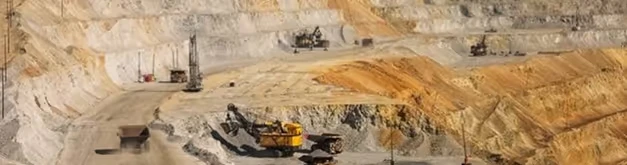
Business Model: How NIOB Creates Value
North American Niobium and Critical Minerals Corp. (CSE: NIOB) operates within the established "Project Generator and Developer" framework common to junior mining companies. Understanding this model is essential for investors to properly evaluate the opportunity.
The Value Creation Cycle
Junior explorers like NIOB create value through a systematic process that unfolds over years, not quarters. Each stage builds upon the previous one, de-risking the asset and increasing its value.

Stage 1 — Acquisition: Acquire undervalued or overlooked assets based on sound geological concepts. NIOB has completed this stage by consolidating its Grenville Province portfolio.
Stage 2 — De-Risking: Use low-cost methods such as sampling, mapping, and geophysical surveys to validate the exploration thesis. NIOB is currently in this stage, having completed Fall 2025 fieldwork.
Stage 3 — Discovery: Deploy capital through drilling towards defining a potential economic mineral resource. This is where NIOB is progressing with its 2026 campaign.
Stage 4 — Monetization: Either develop the mine independently (capital intensive) or, more commonly, sell the asset to a larger producer or spin it out as a separate entity.
Stage 2 — De-Risking: Use low-cost methods such as sampling, mapping, and geophysical surveys to validate the exploration thesis. NIOB is currently in this stage, having completed Fall 2025 fieldwork.
Stage 3 — Discovery: Deploy capital through drilling towards defining a potential economic mineral resource. This is where NIOB is progressing with its 2026 campaign.
Stage 4 — Monetization: Either develop the mine independently (capital intensive) or, more commonly, sell the asset to a larger producer or spin it out as a separate entity.
The "Option Value" Framework
At its current stage, NIOB is priced as a grassroots explorer. However, sophisticated investors recognize that the company effectively holds "options" on multiple distinct value drivers:
The Niobium Option: If drilling confirms Niobec-like grades at Seigneurie or elsewhere, the scarcity of viable niobium projects globally would create substantial takeover appeal. There are simply very few places in the world where companies can explore for niobium in a favorable jurisdiction.
The REE Option: High-grade NdPr results at Blanchette could attract attention from the battery and permanent magnet supply chain, which is desperately seeking non-Chinese sources.
The Government Funding Option: By aligning with Defense Production Act priorities and Canadian Critical Minerals Strategies, NIOB has a legitimate pathway to non-dilutive grant funding. This would dramatically reduce the company's cost of capital compared to peers reliant solely on equity financing.
The Niobium Option: If drilling confirms Niobec-like grades at Seigneurie or elsewhere, the scarcity of viable niobium projects globally would create substantial takeover appeal. There are simply very few places in the world where companies can explore for niobium in a favorable jurisdiction.
The REE Option: High-grade NdPr results at Blanchette could attract attention from the battery and permanent magnet supply chain, which is desperately seeking non-Chinese sources.
The Government Funding Option: By aligning with Defense Production Act priorities and Canadian Critical Minerals Strategies, NIOB has a legitimate pathway to non-dilutive grant funding. This would dramatically reduce the company's cost of capital compared to peers reliant solely on equity financing.
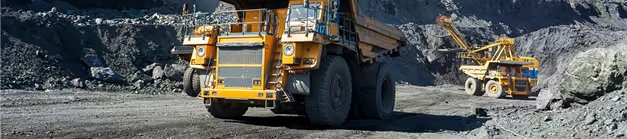
Canada's Strategic Positioning
It is worth noting that NIOB is not operating in a regulatory vacuum. Canada has aligned its critical minerals strategy almost entirely with U.S. national security interests.19 Quebec specifically has positioned itself as the battery and critical minerals hub of North America. The provincial government, through Investissement Québec, offers aggressive financial incentives for exploration and processing. The province's "Plan Nord" and critical minerals strategy prioritize development of the Grenville Province.¹⁴
NIOB is operating in a jurisdiction that is actively being integrated into the U.S. military-industrial complex. This macro-alignment provides a "valuation floor" of strategic interest that standard precious metals explorers simply do not possess.
The Secret Sauce: Why the Grenville Province Matters
Not all exploration ground is created equal. The geological setting of NIOB's properties provides a competitive advantage that is difficult to replicate.
The Niobec Proof of Concept
The Grenville Province of Quebec is not merely "prospective" for niobium and rare earths. It is proven territory.
The Saint-Honoré Alkaline Complex, which hosts the Niobec mine, is the geological proof of concept. Niobec is a carbonatite pipe that has been producing niobium since 1976. It is the only underground niobium mine in the world and demonstrates that the Grenville Province can host world-class, bulk-tonnage niobium deposits.20
NIOB's claims sit 100-130 kilometers from Niobec. In geological terms, this places them in the same metallogenic province. The rocks, the structures, the magmatic history, all of the ingredients that created Niobec could exist within NIOB's land package.
The Saint-Honoré Alkaline Complex, which hosts the Niobec mine, is the geological proof of concept. Niobec is a carbonatite pipe that has been producing niobium since 1976. It is the only underground niobium mine in the world and demonstrates that the Grenville Province can host world-class, bulk-tonnage niobium deposits.20
NIOB's claims sit 100-130 kilometers from Niobec. In geological terms, this places them in the same metallogenic province. The rocks, the structures, the magmatic history, all of the ingredients that created Niobec could exist within NIOB's land package.
NYF Pegmatites: The Technical Distinction
NIOB explicitly targets NYF (Niobium-Yttrium-Fluorine) pegmatites. This distinction from the more common LCT (Lithium-Cesium-Tantalum) pegmatites is crucial for investors to understand.
LCT pegmatites are what you hear about in lithium exploration. They form from granites derived from melting sedimentary rocks. They host lithium, tantalum, and cesium.
NYF pegmatites are different. They form from anorogenic granites or alkaline magmas derived from the mantle or lower crust. They host niobium, rare earth elements (especially heavy REEs), yttrium, fluorine, and sometimes scandium.21
Here is the key insight: NYF pegmatites and carbonatites are often genetically related parts of the same alkaline magmatic system. Finding a swarm of NYF pegmatites can be a vector toward a larger, buried carbonatite complex.
This is precisely the exploration thesis at the Seigneurie and Blanchette properties.
LCT pegmatites are what you hear about in lithium exploration. They form from granites derived from melting sedimentary rocks. They host lithium, tantalum, and cesium.
NYF pegmatites are different. They form from anorogenic granites or alkaline magmas derived from the mantle or lower crust. They host niobium, rare earth elements (especially heavy REEs), yttrium, fluorine, and sometimes scandium.21
Here is the key insight: NYF pegmatites and carbonatites are often genetically related parts of the same alkaline magmatic system. Finding a swarm of NYF pegmatites can be a vector toward a larger, buried carbonatite complex.
This is precisely the exploration thesis at the Seigneurie and Blanchette properties.
The Carbonatite Prize
While pegmatites can offer high grades, they tend to be structurally complex and tonnage-limited. Carbonatites are the prize.
Carbonatites are rare igneous rocks, only about 500 are known worldwide, but they host the vast majority of the world's niobium (Araxa, Niobec) and rare earth elements (Mountain Pass, Mt. Weld).22
During the Fall 2025 program, NIOB field crews identified carbonatite boulders and subcrops at the Blanchette property.²⁴ These are spatially associated with a circular magnetic feature visible on regional geophysics.
In the Grenville Province, circular magnetic anomalies often represent carbonatite pipes. Finding carbonatite boulders directly associated with such a feature strongly suggests a buried carbonatite body.
If drilling confirms a carbonatite pipe at Blanchette, the potential tonnage could rival established mines. This could represent a fundamental shift in how the market values NIOB.
Carbonatites are rare igneous rocks, only about 500 are known worldwide, but they host the vast majority of the world's niobium (Araxa, Niobec) and rare earth elements (Mountain Pass, Mt. Weld).22
During the Fall 2025 program, NIOB field crews identified carbonatite boulders and subcrops at the Blanchette property.²⁴ These are spatially associated with a circular magnetic feature visible on regional geophysics.
In the Grenville Province, circular magnetic anomalies often represent carbonatite pipes. Finding carbonatite boulders directly associated with such a feature strongly suggests a buried carbonatite body.
If drilling confirms a carbonatite pipe at Blanchette, the potential tonnage could rival established mines. This could represent a fundamental shift in how the market values NIOB.
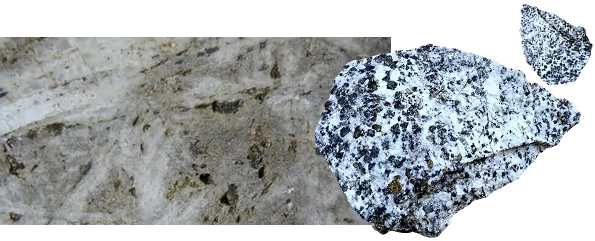
Asset Portfolio: Where the Action Happens
NIOB has consolidated a 100% interest in five properties totaling 29,936 hectares. This district-scale land package allows the company to approach exploration systematically, identifying regional trends rather than chasing isolated anomalies.
Seigneurie Property: The Flagship Target
Seigneurie is the most advanced asset in the portfolio and will be the primary focus of the 2026 drilling campaign.
Historical Context: The property was originally drilled by SOQUEM (a Quebec state-owned explorer) in 1978. At the time, the focus was on uranium and thorium. Drill logs describe pegmatites up to 50 meters wide. Critically, SOQUEM did not systematically assay for niobium or REEs, as these were not commodities of interest at the time.²⁵
Surface Grades: A local prospector revisited the site in 2010. A grab sample returned 0.32% Nb (3,190 ppm) and 0.4% TREE. For context, Niobec mines grades between 0.4% and 0.6% Nb₂O₅. A surface sample of 0.32% Nb in a pegmatite is a highly significant indicator of economic potential.
Fall 2025 Results: In October 2025, CEO Murray Nye and VP Exploration Clyde McMillan visited the site. They confirmed the location of the historical SOQUEM workings and identified new pegmatite outcrops, extending the prospective trend to over 5km. The company completed 94.5 meters of channel sampling. Assays from this program are pending and expected in Q1 2026.
The Opportunity: The target at Seigneurie is a bulk-tonnage pegmatite-hosted niobium/REE deposit. The 50-meter width identified by SOQUEM is exceptional for a pegmatite. If niobium mineralization is disseminated throughout this width, the tonnage potential could be substantial.
Historical Context: The property was originally drilled by SOQUEM (a Quebec state-owned explorer) in 1978. At the time, the focus was on uranium and thorium. Drill logs describe pegmatites up to 50 meters wide. Critically, SOQUEM did not systematically assay for niobium or REEs, as these were not commodities of interest at the time.²⁵
Surface Grades: A local prospector revisited the site in 2010. A grab sample returned 0.32% Nb (3,190 ppm) and 0.4% TREE. For context, Niobec mines grades between 0.4% and 0.6% Nb₂O₅. A surface sample of 0.32% Nb in a pegmatite is a highly significant indicator of economic potential.
Fall 2025 Results: In October 2025, CEO Murray Nye and VP Exploration Clyde McMillan visited the site. They confirmed the location of the historical SOQUEM workings and identified new pegmatite outcrops, extending the prospective trend to over 5km. The company completed 94.5 meters of channel sampling. Assays from this program are pending and expected in Q1 2026.
The Opportunity: The target at Seigneurie is a bulk-tonnage pegmatite-hosted niobium/REE deposit. The 50-meter width identified by SOQUEM is exceptional for a pegmatite. If niobium mineralization is disseminated throughout this width, the tonnage potential could be substantial.
Blanchette Property: The Carbonatite Wildcard

Blanchette has rapidly emerged as a high-priority target due to the discovery of carbonatite indicators.
Exceptional Grades: Historical grab samples collected by government geologists returned 2.7% TREE, with a remarkably high neodymium content of 4,090 ppm Nd. This grade profile is comparable to some of the world's highest-grade REE deposits.
Carbonatite Discovery: During Fall 2025 fieldwork, crews identified carbonatite boulders and subcrops spatially associated with a circular magnetic feature.23
The "Blanchette-1" Target: The 2026 drill program will test this circular magnetic anomaly. If a carbonatite pipe is intersected, Blanchette could become the company's flagship asset, given the inherent scale potential of carbonatite deposits compared to pegmatites.
Exceptional Grades: Historical grab samples collected by government geologists returned 2.7% TREE, with a remarkably high neodymium content of 4,090 ppm Nd. This grade profile is comparable to some of the world's highest-grade REE deposits.
Carbonatite Discovery: During Fall 2025 fieldwork, crews identified carbonatite boulders and subcrops spatially associated with a circular magnetic feature.23
The "Blanchette-1" Target: The 2026 drill program will test this circular magnetic anomaly. If a carbonatite pipe is intersected, Blanchette could become the company's flagship asset, given the inherent scale potential of carbonatite deposits compared to pegmatites.
Bardy and Sabot Properties
These satellite targets provide additional exploration upside within the regional consolidation.
Bardy: Located within a 7km prospective trend. Historical grab samples returned 0.68% TREE (1,150 ppm Nd). Pegmatite dykes up to 4 meters wide have been mapped.
Sabot: Earlier stage, with syenite-hosted mineralization (0.21% TREE). Syenites are often the outer "shell" of a carbonatite complex, suggesting Sabot may be proximal to a larger system.
Bardy: Located within a 7km prospective trend. Historical grab samples returned 0.68% TREE (1,150 ppm Nd). Pegmatite dykes up to 4 meters wide have been mapped.
Sabot: Earlier stage, with syenite-hosted mineralization (0.21% TREE). Syenites are often the outer "shell" of a carbonatite complex, suggesting Sabot may be proximal to a larger system.
Future Vision: The 2026 Roadmap and Beyond
NIOB has outlined a comprehensive C$4.82 million exploration budget for 2026, fully funded by the November and December 2025 financings. This fully funded status is a critical differentiator in a market where many junior explorers are cash-starved.
Phase 1: Q1 2026 — Definition
- Geophysics (C$250k): Airborne magnetics and radiometrics to refine circular anomalies at Blanchette and map structural corridors at Seigneurie
- Geochemistry (C$80k): Soil gas surveys (Radon/Helium) and Fluorine hydrogeochemistry. Fluorine is a pathfinder for NYF systems; Radon/Helium helps locate buried radioactive pegmatites
- Overburden Drilling (C$200k): Sampling bedrock below glacial till to pinpoint optimal drill collars²⁷
Phase 2: Q2-Q3 2026 — Drilling (C$1.9M)
Total Meterage: 6,000 meters of diamond drilling across three properties.
- Seigneurie (~3,000m): Testing the 50-meter wide pegmatite zone for continuity and grade
- Bardy (~2,000m): Testing the 7km prospective trend
- Blanchette (~1,000m): High-risk, high-reward holes targeting the interpreted carbonatite pipe⁵
Key Catalysts to Watch
Q1 2026: Release of assay results from Fall 2025 channel sampling program. This will be the first quantitative validation of the project's grade potential since historical work.
Q2 2026: Commencement of diamond drilling. News flow from an active drill program can significantly impact share price.
Q3-Q4 2026: Drill results. If wide, mineralized pegmatites are confirmed at Seigneurie, or if carbonatite is intersected at Blanchette, this would fundamentally change the market's perception of NIOB.

Long-Term Vision
The ultimate prize is the discovery of a strategic asset that attracts the attention of larger players, whether that be major mining companies seeking niobium diversification, battery supply chain participants seeking rare earth security, or government-backed entities looking to fulfill critical minerals mandates. The exploration success of companies like WA1 Resources demonstrates that the market will reward discovery in this space with valuations that dwarf current junior explorer prices.
Management and Board: The People Behind the Thesis
A junior mining company is ultimately a bet on people. NIOB's team demonstrates a blend of capital markets experience and technical competence essential for this stage of development.
Executive Leadership

Murray Nye — CEO & Director: Mr. Nye is a seasoned mining executive with a specific track record in the "strategic metals" space. He formerly served as CEO and President of American Tungsten (previously Demesne Resources), where he led the acquisition of the IMA Mine project in Idaho, a past-producing tungsten mine.
His experience with American Tungsten involved navigating the U.S. critical minerals landscape, rebranding the company to align with national security themes, and successfully raising capital. This playbook is directly applicable to NIOB's current strategy.
His experience with American Tungsten involved navigating the U.S. critical minerals landscape, rebranding the company to align with national security themes, and successfully raising capital. This playbook is directly applicable to NIOB's current strategy.

Clyde McMillan, P.Geo — VP of Exploration: Appointed in November 2025, Mr. McMillan brings critical technical credibility. His 10+ years of experience in Quebec include roles at Azimut Exploration, Osisko Mining, and Benz Mining.
At Benz Mining, he held a senior technical position and contributed to the team that tripled gold resources at the Eastmain Mine.³⁰ His expertise covers both gold systems and pegmatites, providing the geological nuance needed to interpret complex Grenville mineralogy.
At Benz Mining, he held a senior technical position and contributed to the team that tripled gold resources at the Eastmain Mine.³⁰ His expertise covers both gold systems and pegmatites, providing the geological nuance needed to interpret complex Grenville mineralogy.

Kelvin Lee — CFO: Mr. Lee provides financial governance with over 20 years of experience with publicly traded companies. His resume includes progressively senior roles at Monument Mining (TSX-V gold producer) and Prodigy Gold, which was acquired for $340 million.³¹ This M&A experience on the sell-side is highly relevant for NIOB's potential exit scenarios.
Board of Directors

Joseph A. Carrabba: A heavyweight in the mining industry. Former Chairman, President, and CEO of Cliffs Natural Resources. He has served on the boards of Newmont Mining, Timken Steel, and notably, NioCorp Developments.
His presence validates the niobium strategy and provides high-level industry connections. The link to NioCorp, a leading North American niobium developer, is particularly significant.
His presence validates the niobium strategy and provides high-level industry connections. The link to NioCorp, a leading North American niobium developer, is particularly significant.

Hon. Kerry-Lynne Findlay: A former Canadian Cabinet Minister (National Revenue, Associate Minister of National Defence). Her background is invaluable for navigating the political landscape of critical minerals, permitting processes, and accessing government funding programs.

Mike Petrina — : Mr. Petrina brings 35+ years of mining industry experience, with senior executive roles including VP Mining at MAG Silver (NYSE: MAG), COO at Probe Mining, and VP Mining at Hawthorne Gold. His expertise spans operations, engineering, and project development across both open-pit and underground environments. Notably, his track record includes strong stakeholder management—building relationships with local and Indigenous communities while maintaining ESG compliance. This combination of technical depth and stakeholder credibility is well-suited to advancing NIOB through permitting and development.
Assessment: For a micro-cap company, this is a "heavyweight" board. The presence of Carrabba (NioCorp connection) and Findlay (Government connection) suggests NIOB is punching above its weight class in terms of strategic connectivity.
Financial Analysis: Capital Structure and Liquidity
Share Structure
As of late 2025, NIOB maintains an exceptionally tight capital structure:
- Basic Shares Outstanding: ~23.58 million
- Warrants: ~ 235,704 (Finder's Warrants from November and December 2025 financings)
- Options: 2,000,000
- Fully Diluted: ~25.8 million
- Market Capitalization: ~C$35.1 million (based on ~C$1.36 share price)
Why does this matter? With only approximately 22 million shares outstanding, the stock is highly leveraged to news flow. A positive drill result could move the share price significantly due to the low float.
Recent Financings
In November and December 2025, NIOB closed non-brokered private placements raising a combined C$4.82 million.
- Terms: Issuance of 2,073,262 flow-through shares at C$1.38 per share and 1,351,955 flow-through shares at C$1.45 per share
- Oversubscribed: The offering exceeded its initial combined C$3.5M target, indicating strong demand
- Use of Proceeds: Strictly for Canadian Exploration Expenses (CEE) in Quebec that qualify as “flow-through critical mineral mining expenditures”
- Lock-Up: All securities subject to hold period ending March 18, 2026, and April 13, 2026 removing immediate selling pressure during Q1 2026 news cycle³³
Liquidity Position: The C$4.82M injection fully funds the C$2.69M exploration budget for 2026. The company is not under immediate pressure to raise dilutive capital, which is a significant advantage in the current market environment.

Peer Comparison
WA1 Resources (ASX: WA1): Surged from under $20M to approximately A$1.2 billion following a carbonatite-hosted niobium discovery.24 NIOB trades at roughly 3% of this valuation.
NioCorp Developments (NASDAQ: NB): Market cap of approximately $750M USD (~C$1.05B) with a permitted, feasibility-stage project in Nebraska.25 Notably, NIOB board member Joseph Carrabba also serves on NioCorp's board.
NioCorp Developments (NASDAQ: NB): Market cap of approximately $750M USD (~C$1.05B) with a permitted, feasibility-stage project in Nebraska.25 Notably, NIOB board member Joseph Carrabba also serves on NioCorp's board.
Risks and Mitigants: Eyes Wide Open
Exploration investing rewards those who understand both the opportunity and the journey. NIOB's management has identified the key variables that will shape the company's success, and has developed clear strategies to address each one.
1. Geological Risk
The Risk: Exploration is probabilistic. Surface samples do not guarantee depth continuity. Pegmatites can be "nuggety" (discontinuous), and the mineralization may not extend to economic volumes.
The Mitigant: The company explores in proven territory, Niobec operates approximately just 100km away. A multi-disciplinary approach combining geophysics, channel sampling, and geochemistry builds high-confidence drill targets that could significantly increase discovery probability.
The Mitigant: The company explores in proven territory, Niobec operates approximately just 100km away. A multi-disciplinary approach combining geophysics, channel sampling, and geochemistry builds high-confidence drill targets that could significantly increase discovery probability.
2. Metallurgical Risk
The Risk: Niobium and REE mineralogy are complex. If the elements are locked in refractory silicate minerals rather than recoverable oxide minerals (like pyrochlore or columbite), the deposit may be uneconomic regardless of grade.
The Mitigant: Historical government reports from the region mention pyrochlore the same favorable mineral that makes Niobec economically successful.39 The 2026 program includes first-pass mineralogical work to characterize the deposit early.⁵
The Mitigant: Historical government reports from the region mention pyrochlore the same favorable mineral that makes Niobec economically successful.39 The 2026 program includes first-pass mineralogical work to characterize the deposit early.⁵
3. Liquidity Risk
The Risk: As with many emerging exploration companies, trading volumes are still developing, which can affect ease of entry and exit for investors.
The Mitigant: The recent institutional and high-net-worth interest demonstrated by the oversubscribed financings suggests a tightening of the float. As news flow increases with the 2026 program, liquidity typically improves.
The Mitigant: The recent institutional and high-net-worth interest demonstrated by the oversubscribed financings suggests a tightening of the float. As news flow increases with the 2026 program, liquidity typically improves.
4. Market Risk
The Risk: Commodity prices naturally fluctuate. Changes in niobium or rare earth pricing could influence how the market values exploration-stage assets.
The Mitigant: Unlike cyclical commodities, niobium and REE demand drivers are structural. The December 2025 export controls have accelerated a generational shift toward supply chain security, NIOB is positioned at the forefront of this multi-year megatrend.
The Mitigant: Unlike cyclical commodities, niobium and REE demand drivers are structural. The December 2025 export controls have accelerated a generational shift toward supply chain security, NIOB is positioned at the forefront of this multi-year megatrend.
Investment Thesis: The "Right" Rocks at the "Right" Time
North American Niobium and Critical Minerals Corp. (CSE: NIOB; OTCQB: NIOMF) represents a specific bet on the intersection of geological potential and geopolitical necessity.
The world has changed. The "December Shock" of Chinese export controls has ended the era of cheap, accessible critical minerals. The United States and Canada are now engaged in a well-funded effort to secure domestic supply. Executive orders have been signed. Defense Production Act funds have been allocated. The urgency is real.
The world has changed. The "December Shock" of Chinese export controls has ended the era of cheap, accessible critical minerals. The United States and Canada are now engaged in a well-funded effort to secure domestic supply. Executive orders have been signed. Defense Production Act funds have been allocated. The urgency is real.

NIOB sits at the center of this storm.
It holds a commanding land position in the Grenville Province the "Elephant Country" for niobium, just ~100 kilometers from the Western world's only operating underground niobium mine. It has identified high-grade surface mineralization (2.7% TREE, 0.32% Nb) and, crucially, indicators of a carbonatite system, the geological holy grail for this sector.
It holds a commanding land position in the Grenville Province the "Elephant Country" for niobium, just ~100 kilometers from the Western world's only operating underground niobium mine. It has identified high-grade surface mineralization (2.7% TREE, 0.32% Nb) and, crucially, indicators of a carbonatite system, the geological holy grail for this sector.
With a fully funded 2026 drill program, a tight share structure, and a management team with relevant track records, NIOB offers what some investors may view as asymmetric upside potential.
The downside is the capital risked in exploration. Like all junior explorers, NIOB could fail to find an economic deposit. The drills could come up empty. The grades might not continue at depth. These are real risks that investors must accept.
But the upside is the discovery of a strategic asset that the Western military-industrial complex cannot afford to ignore. In that scenario, peer comparisons to WA1 Resources suggest valuations that are multiples of NIOB's current market cap.
The downside is the capital risked in exploration. Like all junior explorers, NIOB could fail to find an economic deposit. The drills could come up empty. The grades might not continue at depth. These are real risks that investors must accept.
But the upside is the discovery of a strategic asset that the Western military-industrial complex cannot afford to ignore. In that scenario, peer comparisons to WA1 Resources suggest valuations that are multiples of NIOB's current market cap.

Key Reasons to Consider NIOB
- Macro Alignment: The company explores for the materials targeted by China's export bans and U.S. defense funding initiatives
- Geological Credibility: The Grenville Province has proven it can host world-class niobium deposits (Niobec)
- Grade Potential: Surface samples showing up to 2.7% TREE and 0.32% Nb are highly encouraging indicators
- Carbonatite Wildcard: The discovery of carbonatite indicators at Blanchette could unlock scale potential far beyond typical pegmatite deposits
- Financial Positioning: Fully funded 2026 program eliminates near-term dilution risk
- Share Structure Leverage: Tight share structure amplifies the impact of positive news
- Experienced Team: Board-level expertise from Cliffs Natural Resources and Canadian government provides strategic connectivity
Catalysts to Monitor
- Q1 2026: Fall 2025 channel sample assay results
- Q2 2026: Commencement of 6,000-meter drilling program
- Q3-Q4 2026: Initial drill results from Seigneurie, Bardy, and Blanchette
- Ongoing: Potential government funding announcements or strategic partnerships
For investors seeking speculative exposure to the critical minerals thesis, NIOB presents a clear, near-term catalyst calendar with defined risk parameters and meaningful upside potential.
Conclusion: A Story Worth Following
We began this report with the "December Shock" the moment China weaponized its dominance of critical mineral supply chains. We end it with a question: What comes next?
The answer is that Western governments and industries are scrambling. Defense Production Act funding is flowing. Executive orders are being signed. The strategic importance of niobium and rare earths has never been clearer.
North American Niobium and Critical Minerals Corp. (CSE: NIOB; OTCQB: NIOMF) finds itself in a rare position: the right jurisdiction, the right commodities, the right geological setting, and the right timing.
This is not a guarantee of success. Exploration is difficult. Many companies fail to find economic deposits. But for those that succeed, the rewards can be extraordinary, as WA1 Resources demonstrated.
The next 12 months will tell the story. Channel sample results in Q1. Drilling commences in Q2. Results flow through Q3 and Q4. For investors comfortable with exploration risk, this represents a clearly defined opportunity to participate in what could be a significant discovery event.
We encourage all interested parties to conduct their own due diligence, consult with qualified financial advisors, and make decisions appropriate to their individual risk tolerance and investment objectives.
The answer is that Western governments and industries are scrambling. Defense Production Act funding is flowing. Executive orders are being signed. The strategic importance of niobium and rare earths has never been clearer.
North American Niobium and Critical Minerals Corp. (CSE: NIOB; OTCQB: NIOMF) finds itself in a rare position: the right jurisdiction, the right commodities, the right geological setting, and the right timing.
This is not a guarantee of success. Exploration is difficult. Many companies fail to find economic deposits. But for those that succeed, the rewards can be extraordinary, as WA1 Resources demonstrated.
The next 12 months will tell the story. Channel sample results in Q1. Drilling commences in Q2. Results flow through Q3 and Q4. For investors comfortable with exploration risk, this represents a clearly defined opportunity to participate in what could be a significant discovery event.
We encourage all interested parties to conduct their own due diligence, consult with qualified financial advisors, and make decisions appropriate to their individual risk tolerance and investment objectives.
The critical minerals story is just beginning. NIOB could be one of the names that shapes it.

.png)